Beef · Dry-aged
Dry-agedporterhouse.
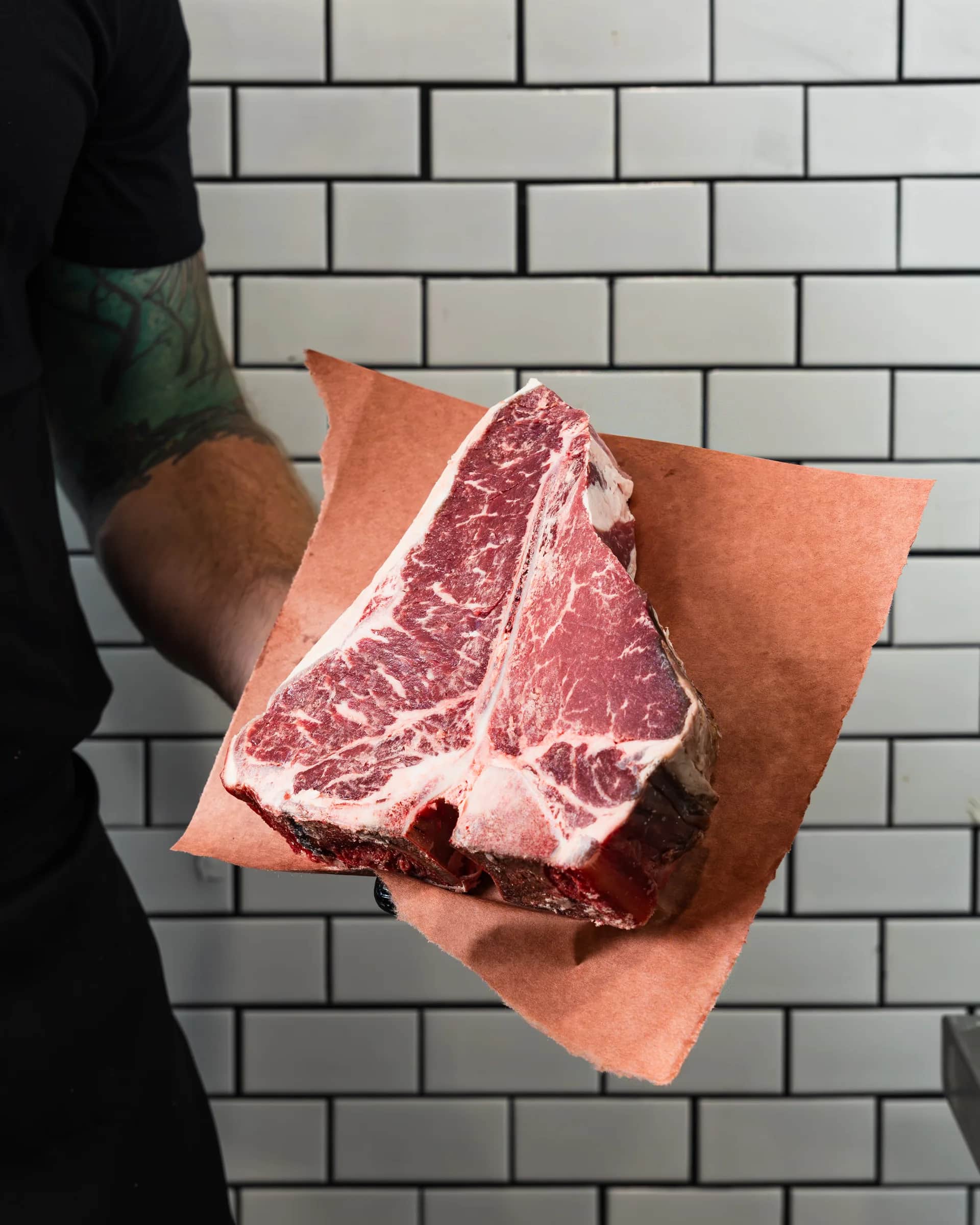
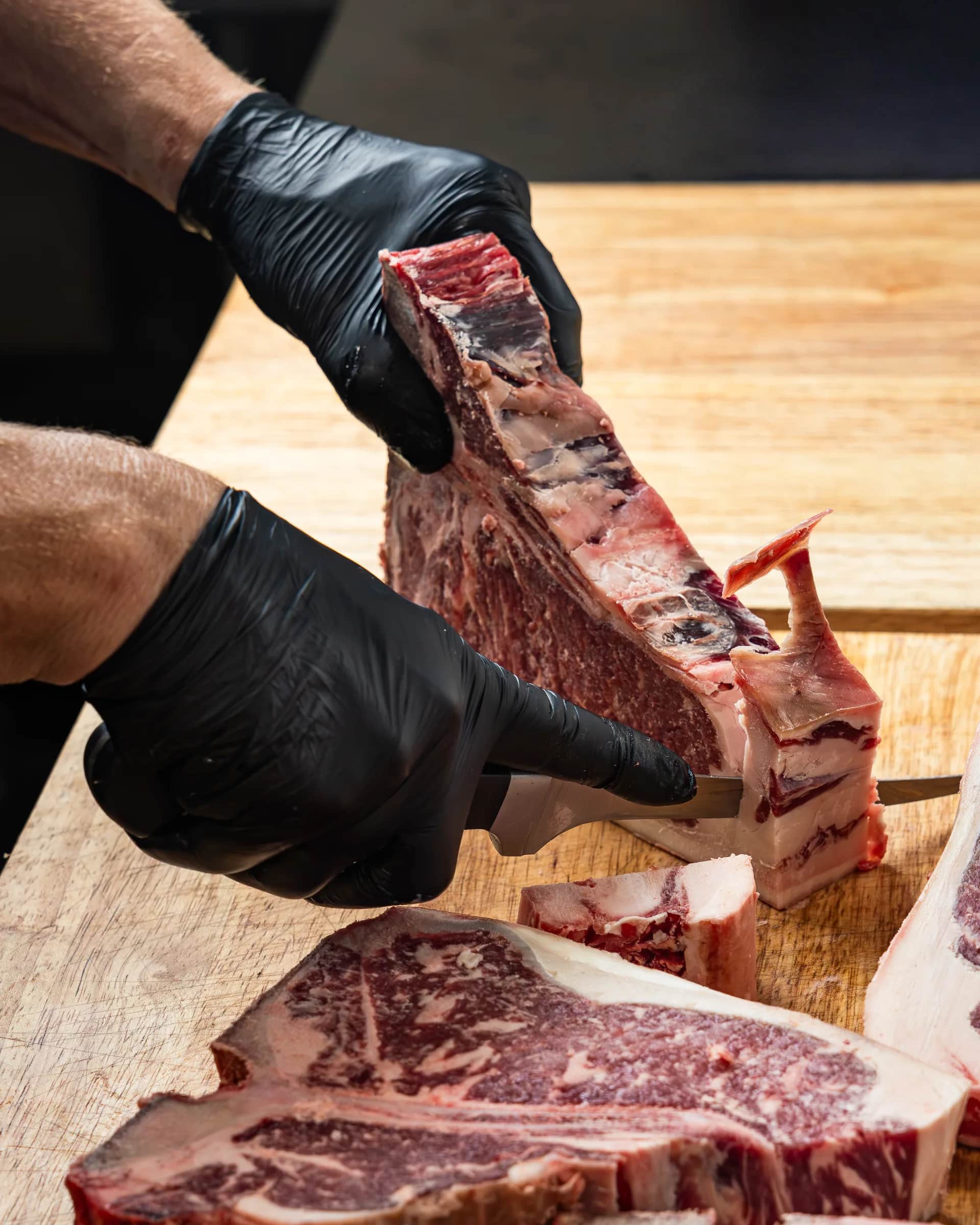
Two steaks separated by a T-bone — a strip on one side, a filet on the other. The whole short loin, dry-aged in the cellar.
From the counter
About dry aged porterhouse.
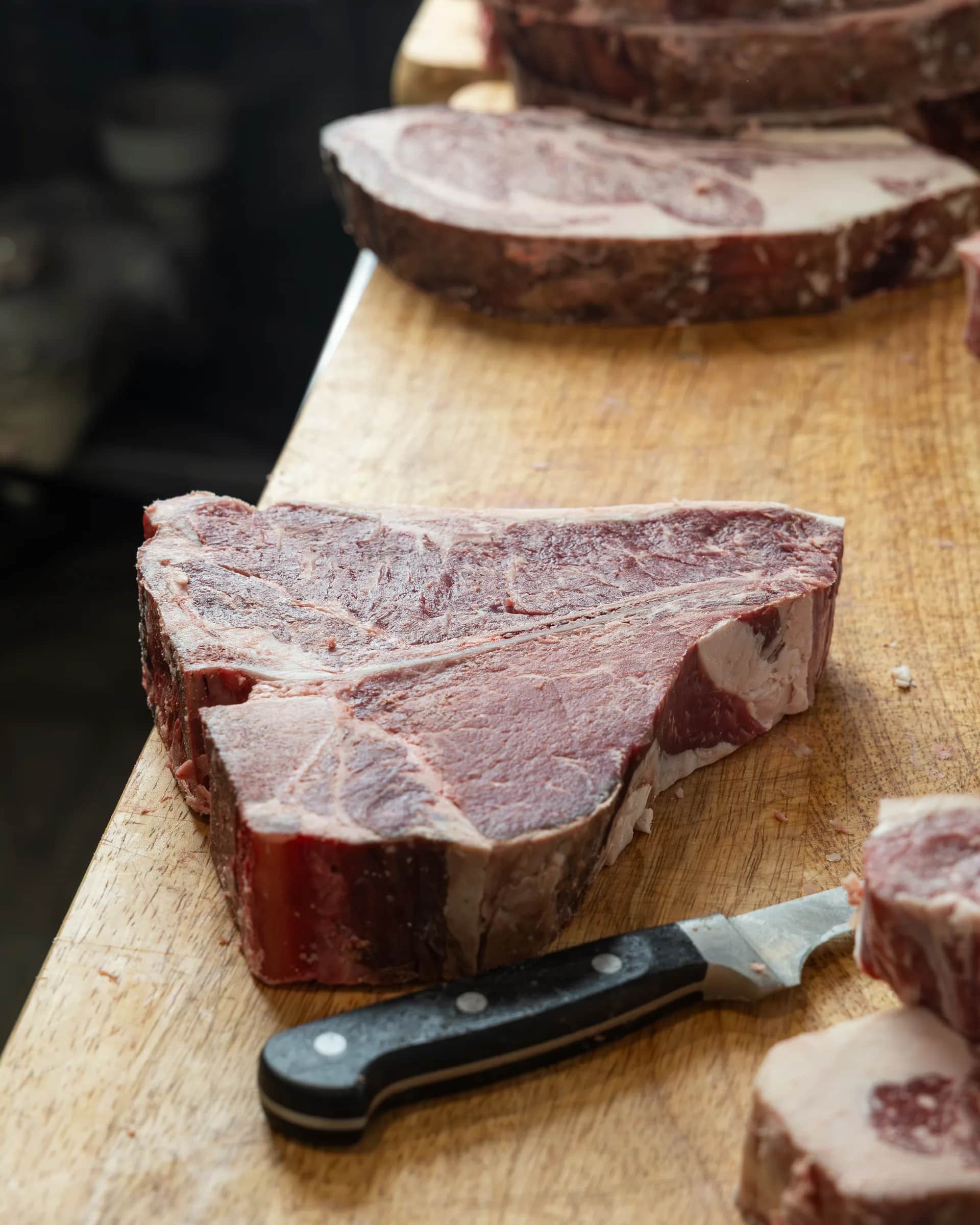
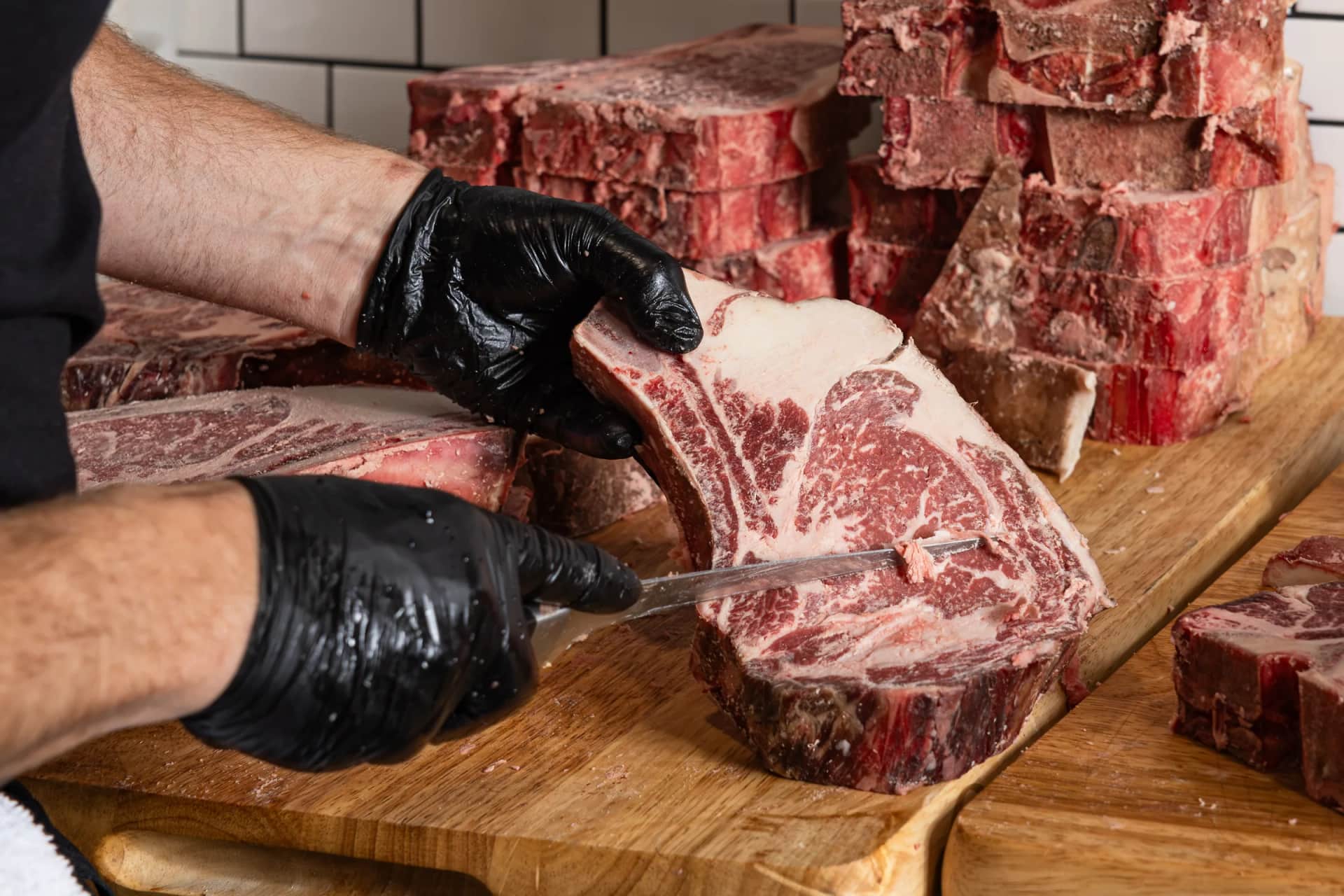
A true porterhouse has both a generous strip steak and a generous filet — separated by a T-shaped bone. We cut from whole short loins, so the filet side is the real, large piece (a smaller filet means it's technically a T-bone, not a porterhouse).
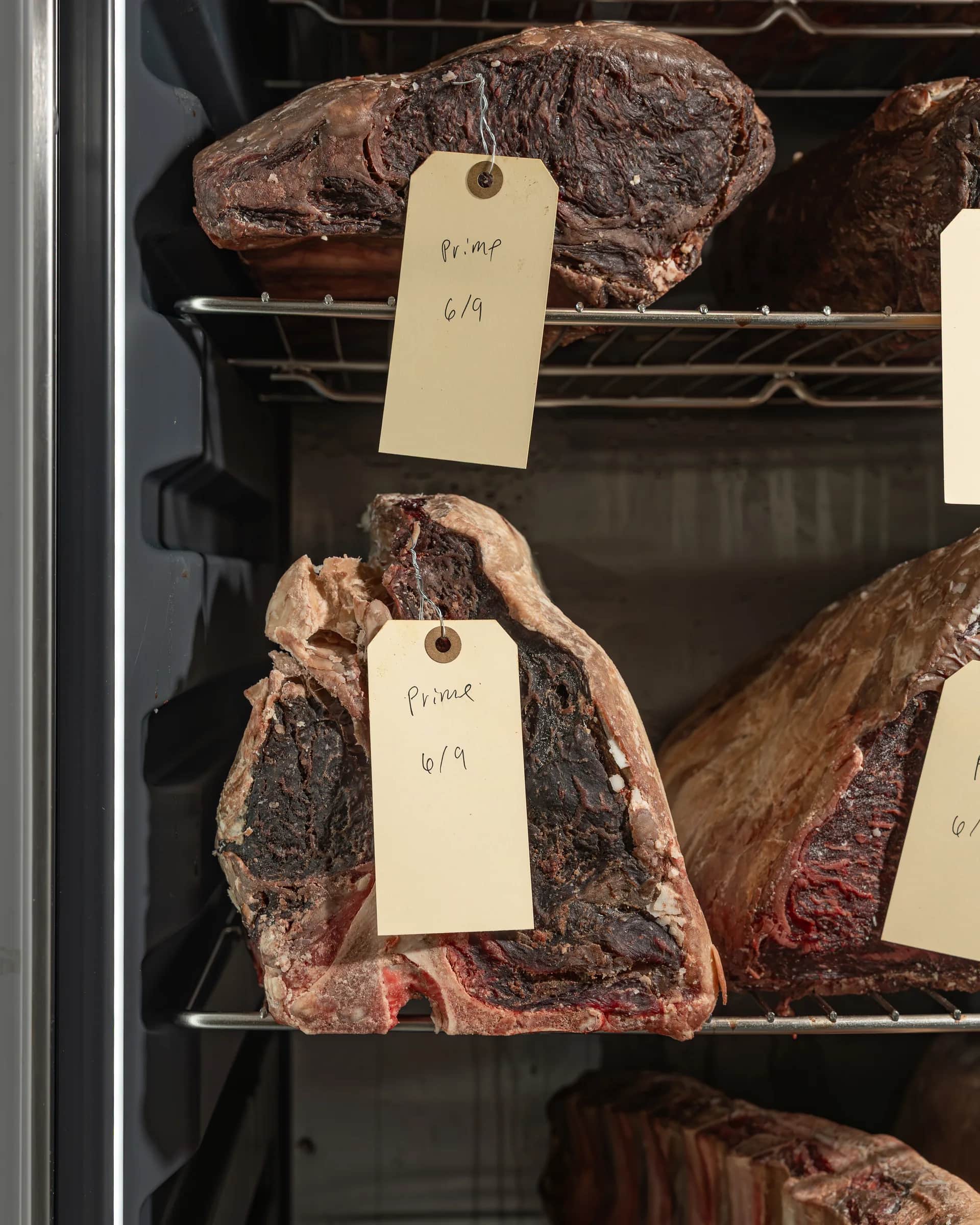
Hung 28 days minimum, this is the steak we put on the case for two people who want to share the difference between the two cuts in one bite — the strip's beef character vs. the filet's quiet tenderness, both on the same bone.
Cut to 1.5" – 2" thick. 32–40 oz typical. Tied off if you want it Frenched.
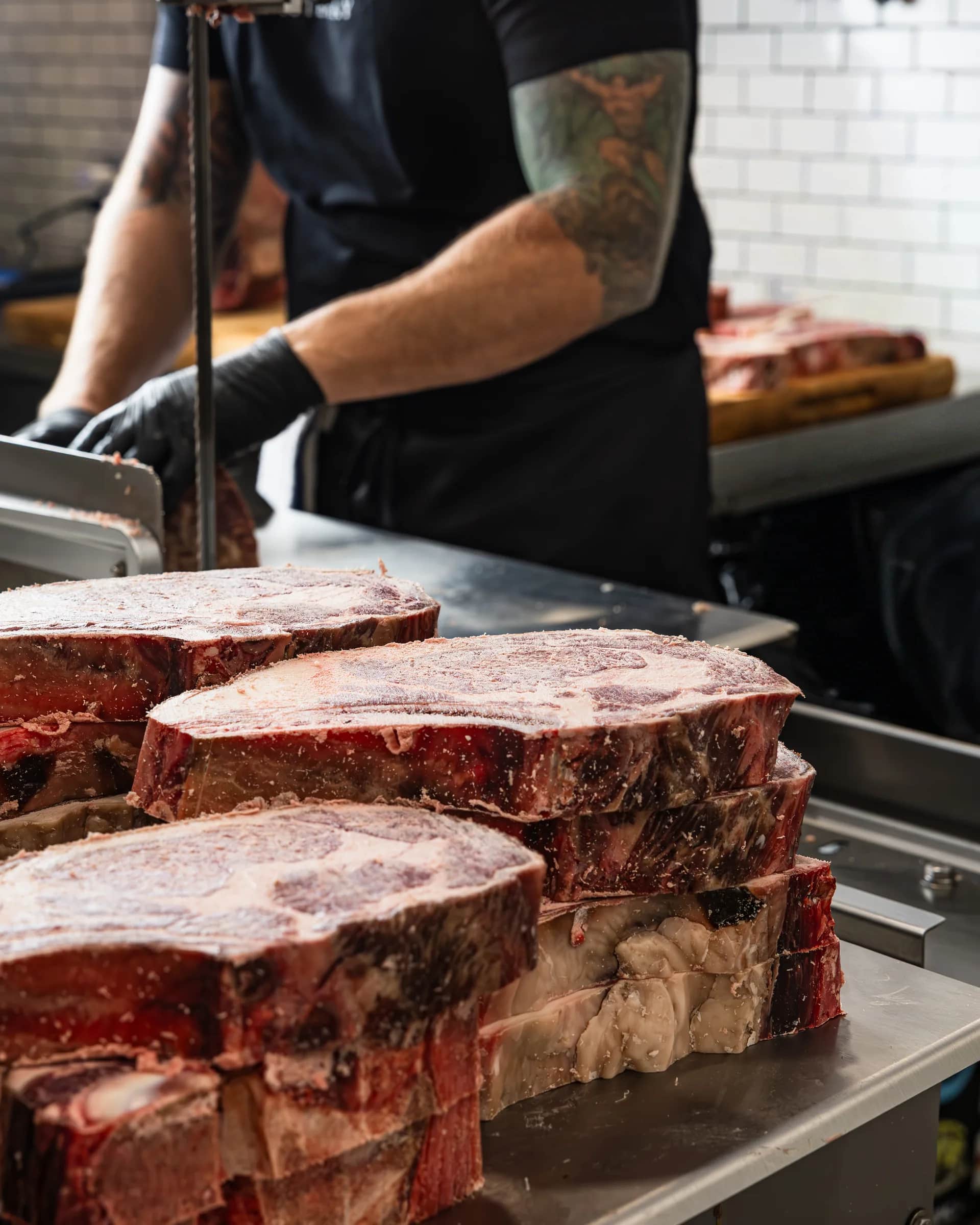
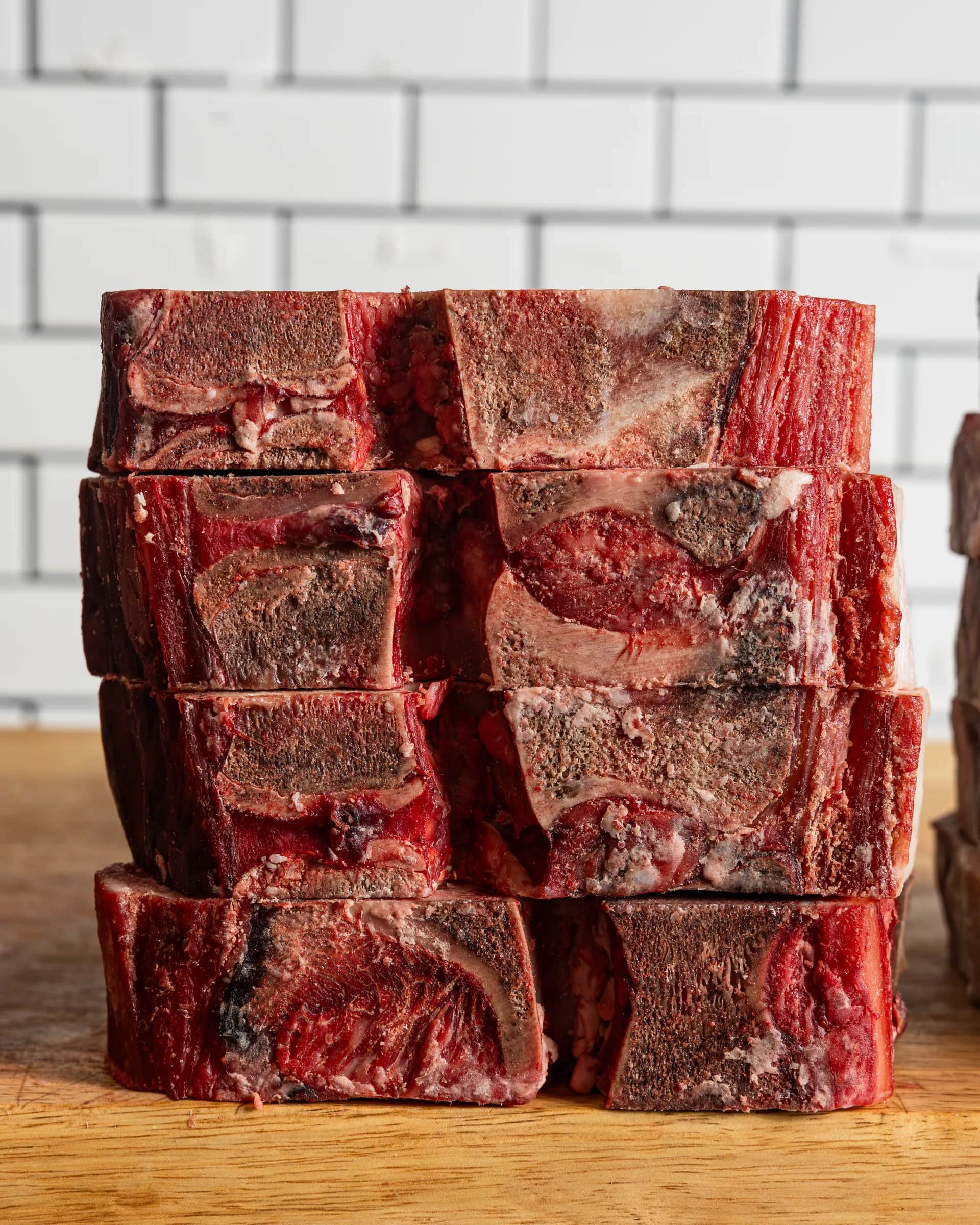
We cut it from whole short loins hung in our cellar for 28 days and beyond — see how we dry-age on the bone.
At a glance
Grade
USDA Prime
Cut to
1.5" – 2" portions
Dry-age
28 days standard, longer by request
Weight
32 – 40 oz
Serves
2 generous
In the case
Cooking notes
How we'd cook it.
01 · Method
The two-zone problem
The filet finishes before the strip — start strip-side over direct heat for the sear, then rotate to put the filet on the cooler side. Pull when the strip is 125°F (the filet will be 120°F, just right). Rest 10 minutes.
02 · Method
Bone-down close-out
Last 2 minutes, lay the steak bone-down — the bone shields against overcook and adds marrow note to the crust.
See how we’d cook it — short notes from the counter for the cuts we sell.
Hold one for me
Call the counter.
24 hours notice for special cuts, dry-aged whole loins, and holiday standing orders. We hold the case for the order with your name on it — that’s the counter conversation behind every cut.