
How we'd cook it
Five cuts,five short notes.
Cooking notes for the cuts we sell — the way the team would tell you over the counter, written down. Nothing here is precious; the cut is doing most of the work.
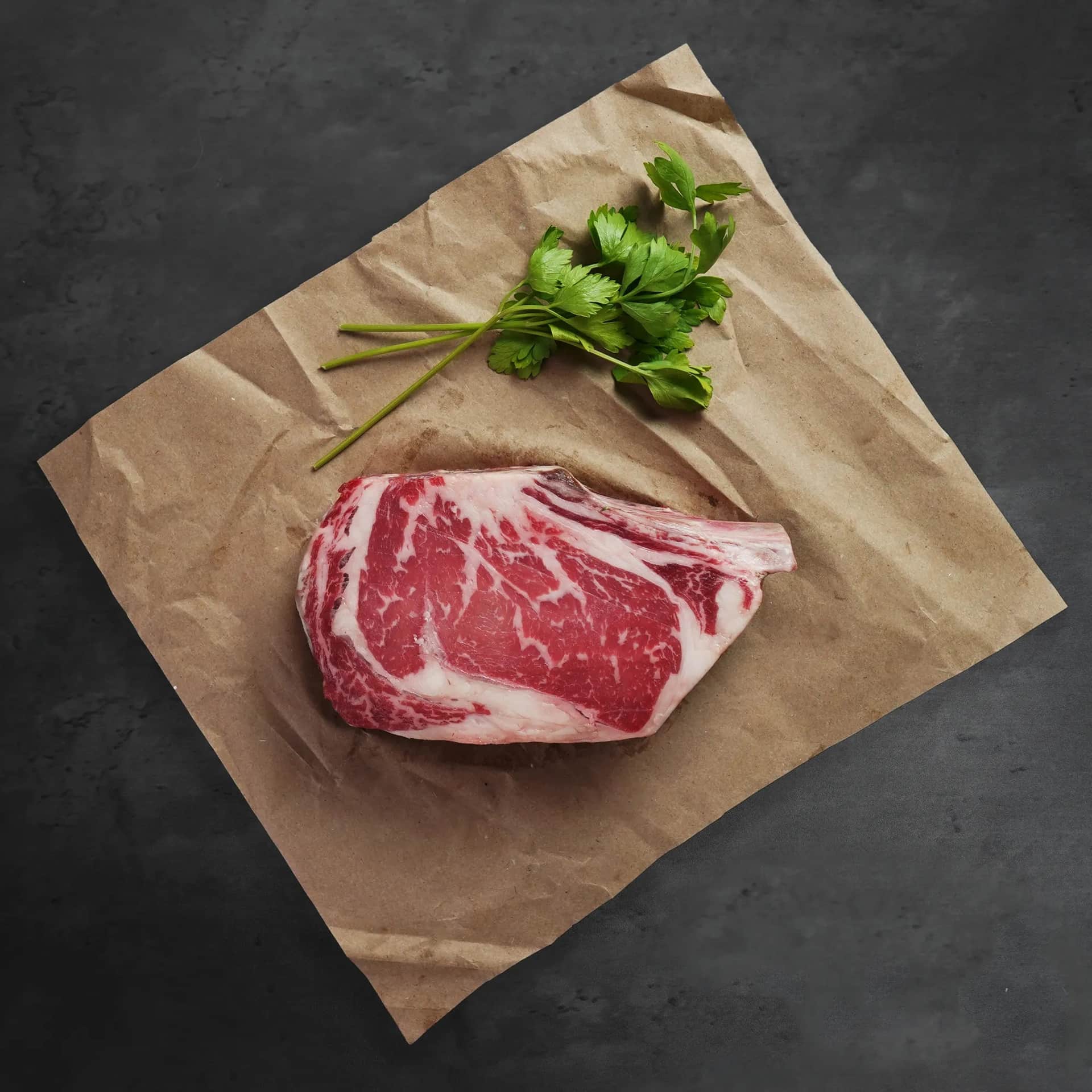
Dry-aged ribeye
N° 01 · Dry-aged ribeye
Reverse-sear,patience first.
The right way to cook a thirty-five-day ribeye is to start low, finish high, and not touch it in between.
- Dry
Pull the steak from the wrap an hour before. Pat the surface bone-dry. Salt heavily; no pepper yet.
- Slow
Oven at 220 °F (105 °C). Steak on a rack over a tray. Cook until internal reads 115 °F (46 °C) for medium-rare — 35 to 45 minutes for a 1.5-inch cut. A probe is honest, a clock is approximate.
- Rest
Off the heat, 8 to 10 minutes. The temperature will keep climbing.
- Sear
Cast iron, ripping hot. A neutral oil with a high smoke point. 60 to 90 seconds a side. Bone-in cuts: hold the bone against the pan with tongs to render the fat along it.
- Finish
Off heat, basting butter with thyme and garlic for the last 20 seconds. Pepper after the sear, never before. Cut against the grain, rest a final two minutes, and serve plain.
On dry-aged: less is more. The cut is doing the work — your job is to stay out of its way.
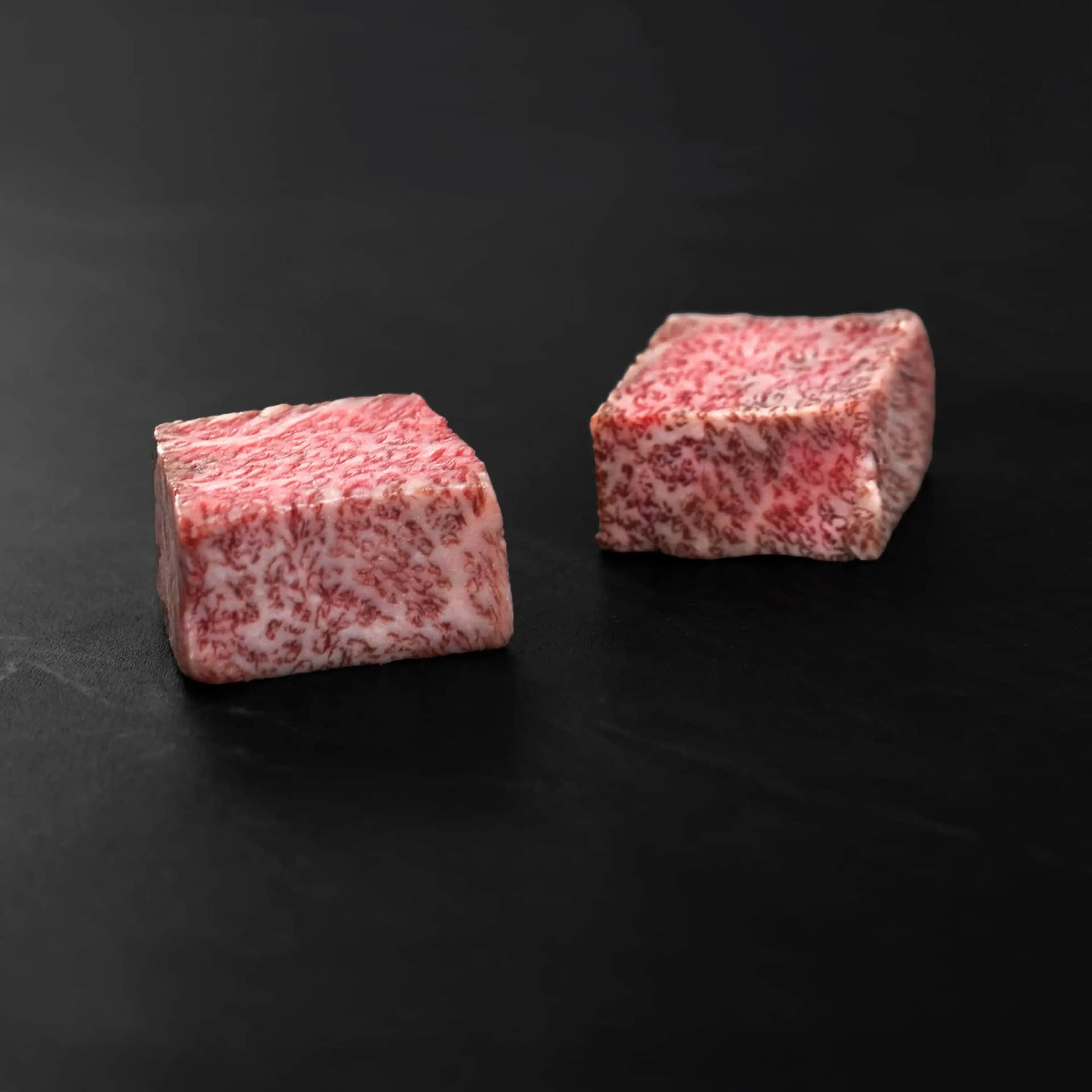
A5 Japanese Wagyu
N° 02 · A5 Japanese Wagyu
Thin slices,thirty seconds.
A5 is a small-format ingredient. Cook it like that.
- Slice
Cut the block while it's still cold — quarter-inch slices, against the grain. A warm knife helps; a serrated edge crushes the marbling.
- Heat
Stainless or cast iron over high. No oil — the fat will render and pool the moment the meat touches the pan.
- Cook
15 to 20 seconds a side. The slice will turn from rose to grey at the edge; that's the sign. Lift it off.
- Rest
On a warm plate, salt with a coarse flake. Wait one minute before the first bite. The marbling redistributes — you'll taste the difference.
- Portion
Two ounces per person is plenty. A5 is a richness exercise, not a steakhouse exercise.
Pour the rendered fat into a side bowl — it makes the best vinaigrette of the year.
Cook the cut you bought, not the recipe you saw on the internet.
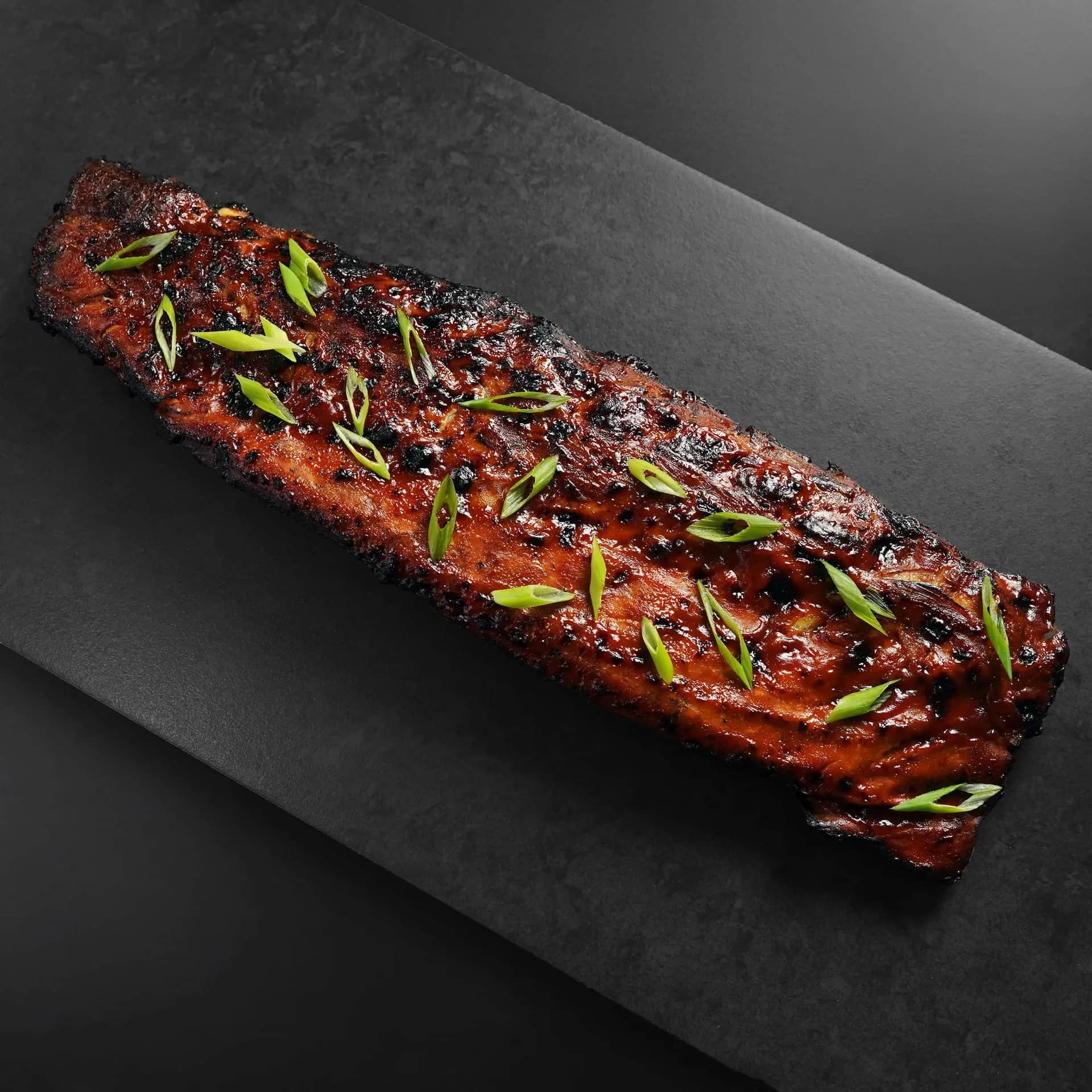
Heritage Duroc pork shoulder
N° 03 · Heritage Duroc pork shoulder
Low oven,the next morning.
Pork shoulder is the most forgiving cut we sell. The trick is time.
- Salt
Dry-brine the night before. Coarse salt across the whole shoulder, on a rack in the fridge uncovered. The surface dries; the salt seeps.
- Heat
Oven at 275 °F (135 °C). Shoulder on a rack over a deep tray, fat-cap up. No liquid. No covering.
- Hold
Six to eight hours, depending on weight. Internal will rise to 195–205 °F (90–96 °C). At 195 it's pull-able; at 205 the collagen is fully gone.
- Rest
Out of the oven, tented in foil, on the counter for an hour. Bigger cuts can rest for two without losing heat.
- Pull
Two forks. Discard the obvious gristle, keep the fat. The crust — the bark — is the best part.
Drippings + a splash of cider vinegar = the sauce. Don't make a sauce; just don't waste the drippings.
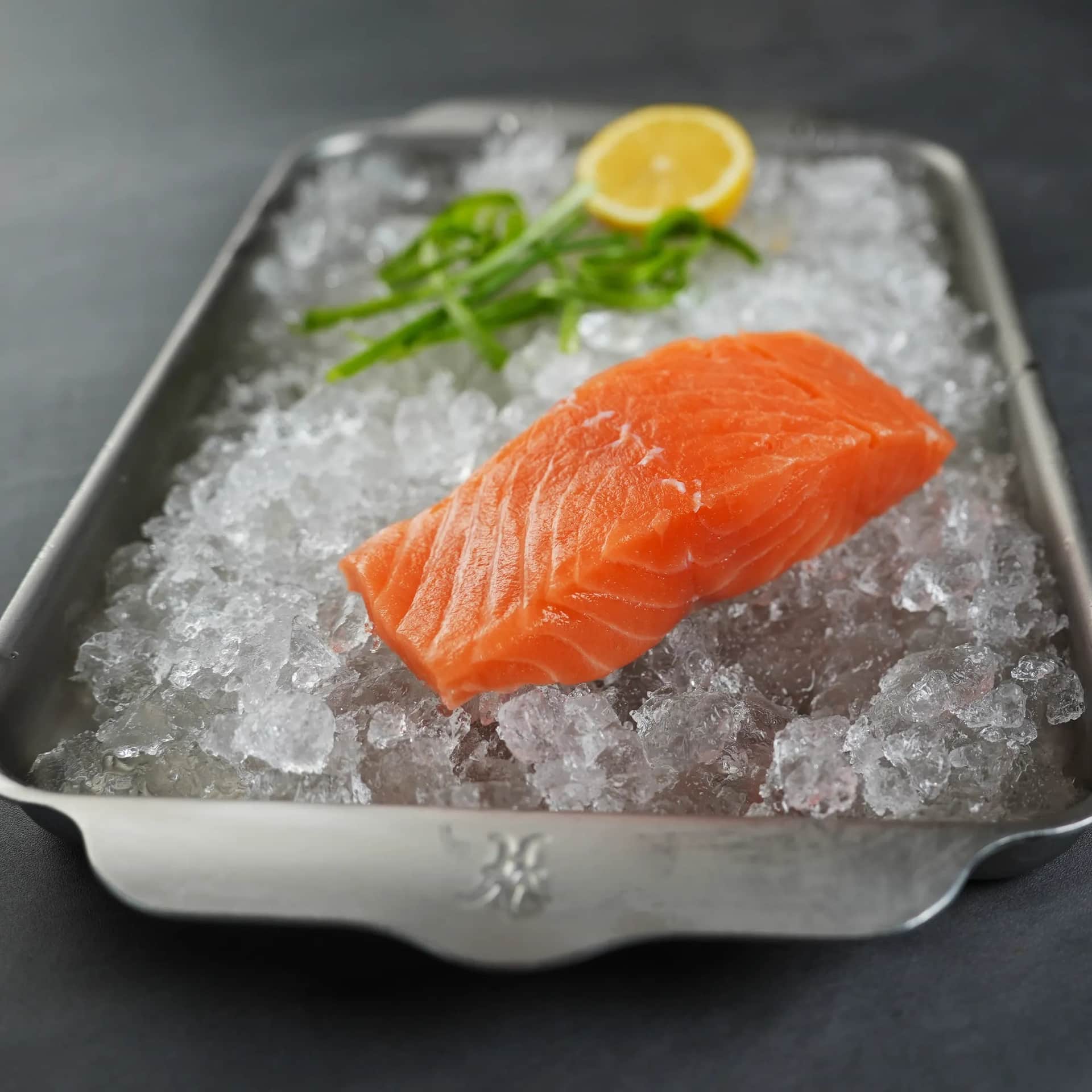
Day-boat salmon
N° 04 · Day-boat salmon
Raw,or barely cooked.
If the fish is good, it doesn't need much. If it's not, no recipe will save it.
- Raw
Quarter-inch slices, sashimi-style, against the grain. Coarse flake salt, a few drops of good olive oil, a squeeze of lemon at the table. Nothing else.
- Or
Skin-on fillet, skin-side down on a cold pan, heat to medium. The fat renders, the skin crisps, and the flesh barely cooks — three minutes is enough for the bottom half-inch.
- Flip
Lift the fillet (the skin will release on its own when ready), kill the heat, and let the residual carry it through. The top should stay bright pink and translucent.
- Serve
On a warm plate with the skin-side up — the crisp is the point. Lemon and salt; no sauce.
Frozen-then-thawed salmon will not do this. Day-boat or nothing.
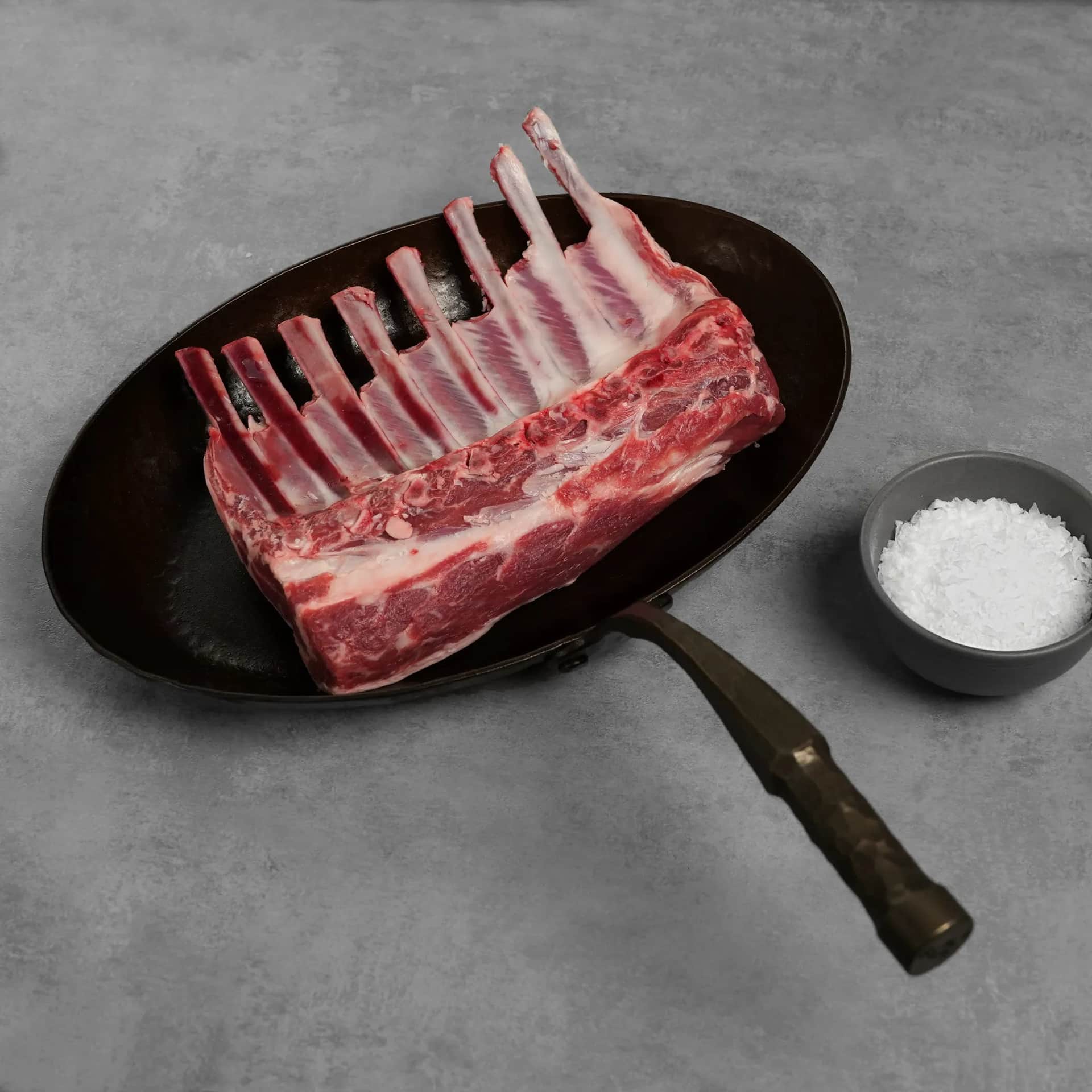
Rack of lamb
N° 05 · Rack of lamb
Sear, oven,sleep on it.
A frenched rack is a dinner-party cut. Treat it like one.
- Score
Score the fat cap in a shallow crosshatch. Season aggressively with salt; black pepper is fine; rosemary later.
- Sear
Cast iron over high, fat-cap down first. 3 to 4 minutes until deep brown. Sides for a minute each.
- Oven
400 °F (205 °C), 12 to 15 minutes for medium-rare. Pull at 128 °F (53 °C) internal — it'll climb 5 degrees off the heat.
- Rest
Loosely tented, 10 minutes minimum. The carry-over is the cook.
- Carve
Between the bones, one chop at a time. Serve two per person. A spoonful of pan jus with crushed rosemary at the table.
The bones will be hot. Warn the table.
Stuck?
Call the counter. We'll talk you through it before the salt goes on.